

How Valuable are Meteorites? 2026 Price Guide
There’s something almost magical about holding a piece of space in your hands. Meteorites aren’t just rocks. They’re fragments of ancient worlds that have traveled millions of miles to reach Earth. This makes them incredibly desirable to collectors, researchers, and investors who want to own something genuinely extraterrestrial.
But here’s the thing: meteorite values don’t follow normal collecting rules. You can’t just look up gold prices and calculate worth like you would with jewelry. Instead, meteorite pricing depends on where the rock came from (Mars? The Moon? An asteroid?), how rare it is, and what scientists can learn from it. A tiny chip from Mars might cost more than a diamond, while a large iron meteorite could sell for less than silver by weight.
Let us walk you through what actually drives meteorite values in 2026 and give you some real numbers to work with, whether you’re thinking about buying or selling.
What Makes a Meteorite Valuable? Key Pricing Factors
The meteorite market operates on completely different principles than most collectibles. Sure, rarity matters, but it’s not the only factor. I’ve seen massive iron meteorites sell for surprisingly modest amounts, while tiny Martian specimens command absolutely staggering prices. Understanding why requires looking at several key factors.
Rarity and Classification Type
Scientists group meteorites into three main categories (stony, iron, and stony-iron), with dozens of subcategories within each. These classifications tell us about composition, formation processes, and ultimately, how much collectors want them.
Ordinary chondrites make up about 80% of all meteorite finds. They’re fascinating scientifically, containing those small round structures called chondrules that formed in the early solar system. But their abundance keeps prices reasonable, making them perfect entry points for new collectors.
Then you’ve got the rare stuff. Lunar meteorites exist because massive impacts on the Moon’s surface launched chunks of rock into space with enough force to eventually reach Earth. Only about 650 pounds of lunar meteorite material has been recovered worldwide. Martian meteorites are even rarer, with only around 300 pounds confirmed. Compare that to the tons of ordinary chondrites found every year.
Iron meteorites occupy an interesting middle ground. They’re easier to spot than stony meteorites (they look obviously metallic and stick to magnets), so more get found and authenticated. But the really spectacular ones showing those gorgeous Widmanstätten patterns when etched can command serious money from collectors who want impressive display pieces.
Pallasites deserve special mention here. These stony-iron meteorites contain translucent olivine crystals embedded in iron-nickel matrix. When properly prepared and backlit, they’re absolutely stunning, nature’s stained glass windows from space. The combination of scientific significance and aesthetic beauty makes them highly desirable. Like other rare collectibles, art, and antiques, pallasites attract buyers seeking both investment potential and visual impact.
Provenance and Historical Significance
A meteorite’s story matters enormously. Witnessed falls carry the highest premiums because someone actually saw them enter Earth’s atmosphere. The meteorite was recovered quickly, documented properly, and suffered minimal weathering. Compare this to a “find” that might have been sitting in a desert for thousands of years.
Historical significance adds value too. Meteorites from famous falls, those mentioned in scientific literature, or specimens from notable collections command higher prices. It’s similar to how an artwork’s exhibition history affects its value.
Condition and Visual Appeal
Condition assessment gets technical quickly. Meteorite labs assign weathering grades (W0 through W6) that indicate how much terrestrial alteration has occurred. W0 specimens show no weathering, while W6 specimens are heavily altered and much less valuable. Shock grades measure impact damage, and both factors directly affect pricing.
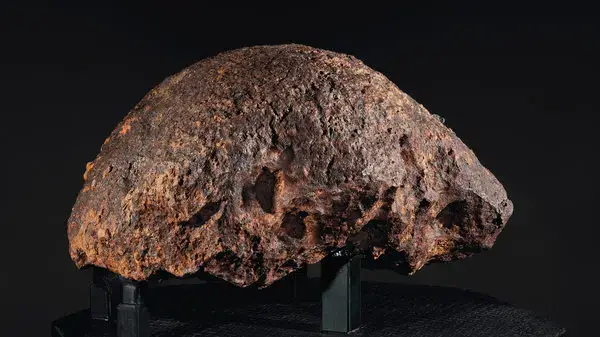
Physical condition ties directly to both scientific value and visual appeal. Intact fusion crust (that glassy outer coating formed during atmospheric entry), those distinctive thumbprint-like depressions called regmaglypts, and minimal rust or weathering all signal a well-preserved specimen worth more money.
Visual appeal can’t be ignored either. A beautifully prepared slice showing chondrules, a polished iron meteorite displaying Widmanstätten patterns, or a pallasite with gem-quality olivine crystals will always command premium prices from collectors who want display-worthy pieces.
Size, Weight, and Total Known Mass
Here’s where meteorite economics get interesting. Size matters, but not always in the way you’d expect. Larger specimens make better display pieces and provide more material for scientific study. But size alone doesn’t guarantee high value without supporting rarity and condition factors.
The total known mass of a particular meteorite fall or type creates crucial supply constraints. If only a few kilograms of material exists from a specific fall, every piece becomes more valuable. This is why some obscure meteorites command higher prices than more famous but abundant types.
Weight affects total value even when per-gram pricing stays constant. A 100-gram specimen at $10 per gram costs $1,000, while a 10-gram piece of the same material costs $100. Simple math, but it influences how dealers price inventory and what collectors can afford.
2026 Meteorite Price Guide by Type
Let us give you some real numbers to work with. These prices reflect current market conditions in 2026, though values fluctuate based on quality, provenance, and individual specimen characteristics.
Common Specimens Pricing
| Meteorite Type | Price Range | Notes |
| Unclassified stone chondrites | $0.50/gram | Readily available from Sahara Desert sources |
| Witnessed fall specimens (e.g., Gao-Guenie) | $1.50/gram | Documented historic falls |
| Common stony meteorites | $1-$20/gram | Varies by type and condition |
| Iron meteorites | $1-$50/gram | More durable and easier to identify than stony types |
| Campo del Cielo iron meteorite (1 kg specimen) | ~$400 | Top quality specimens from Argentina |
Ordinary chondrites represent your best entry point into meteorite collecting. At fifty cents to a few dollars per gram, you can own genuine space rocks without breaking the bank. These specimens might not command huge prices, but they’re scientifically fascinating and absolutely authentic.
Iron meteorites cost more but offer excellent value for collectors wanting impressive display pieces. They’re virtually indestructible, easy to authenticate, and many show beautiful internal structures when cut and polished. Campo del Cielo specimens from Argentina remain popular because they’re affordable, attractive, and come from a well-documented fall.
Rare and Premium Specimens Pricing
| Meteorite Type | Price Range | Notes |
| Pallasites (prepared slices) | $20-$40/gram | Stony-iron meteorites with olivine crystals; highly desirable when polished |
| Diogenite (e.g., Tatahouine) | $50/gram | Rare type; prime specimens command premium prices |
| Martian meteorites | $1,000+/gram | Exceptionally rare; known origin from Mars |
| Lunar meteorites | $1,000+/gram | Extremely rare; can exceed $200,000/pound |
Now we’re talking serious money. Lunar meteorites often exceed $1,000 per gram for authenticated specimens with solid provenance. Consider that you can legally own these while NASA’s Apollo samples remain government property. The rarity and legal accessibility create intense demand.
Martian meteorites compete directly with lunar specimens for the highest prices. Research institutions actively seek Martian material for scientific study, creating additional demand pressure beyond collector interest.
The Most Valuable Meteorites Ever Discovered
Some meteorites have achieved legendary status through record-breaking sales or irreplaceable scientific importance. These exceptional pieces show what’s possible at the top end of the market.
Record-Breaking Auction Sales
The meteorite world was shaken in July 2025 when Sotheby’s New York sold the NWA 16788 Martian meteorite for $5.3 million. This 54-pound specimen became the most expensive meteorite ever sold at auction and represents the largest known piece of Mars available to private collectors. The sale proved that exceptional specimens can command prices rivaling fine artworks.
Christie’s achieved $525,000 for the Tisserlitine 001 lunar meteorite in 2021, while a 406-gram lunar specimen brought $189,000 (over $200,000 per pound). These results demonstrate consistent demand for premium extraterrestrial materials among serious collectors.
The Springwater pallasite sale deserves mention too. The Royal Ontario Museum paid approximately $511,000 for this 117-pound specimen discovered in Saskatchewan. Museum acquisitions often establish pricing benchmarks that influence private market transactions.
Priceless Scientific Specimens
Some meteorites transcend monetary valuation entirely. Type specimens used to define new meteorite classifications, samples containing previously unknown minerals, or materials preserving pristine records of solar system formation become scientifically priceless. Institutions guard these specimens carefully because their loss would impair ongoing research.
This creates interesting tensions between scientific and collecting communities. Researchers prioritize preservation and study access, while collectors value ownership and display. The most scientifically important specimens typically remain in institutional collections where they can benefit research indefinitely.
How to Tell If Your Meteorite Is Valuable
Determining meteorite value starts with confirming authenticity, since many terrestrial rocks look meteorite-like to untrained observers. Genuine meteorites typically feel surprisingly heavy for their size due to iron-nickel content. Most show magnetic properties and may display fusion crust from atmospheric heating.
Visual inspection provides initial clues but can’t replace laboratory analysis for definitive identification. Look for regmaglypts (those thumbprint-like surface depressions), metallic flecks, or unusual internal structures when broken. But plenty of Earth rocks share these characteristics, so professional authentication becomes essential for valuable specimens.
Physical testing helps screen potential meteorites. The streak test (dragging across unglazed porcelain) reveals whether specimens behave like meteorites or terrestrial rocks. Density measurements can confirm whether specimens match expected meteorite densities. Magnet tests verify iron-nickel content, though some meteorite types show weak magnetic responses.
Professional classification from recognized meteorite laboratories provides documentation needed for serious sales. These analyses cost several hundred dollars but establish credibility essential for valuable specimens. Without proper documentation, even genuine meteorites face significant skepticism from knowledgeable buyers.
Current Market Trends Affecting Meteorite Values in 2026
The meteorite market continues growing as public interest in space science increases and online platforms make collecting more accessible. Auction results show sustained demand for premium specimens, especially lunar and Martian types. More meteorite hunters are actively searching known strewn fields, expanding available inventory for common types while rare classifications remain scarce.
Institutional buying patterns significantly influence pricing as museums and research facilities compete with private collectors. Universities particularly seek teaching specimens, while private collectors increasingly view meteorites as alternative investments with appreciation potential.
Digital marketplaces have revolutionized meteorite trading by connecting global buyers and sellers efficiently. However, this accessibility also enables fraud through misidentified materials. Buyers now demand professional certification and detailed provenance documentation before completing transactions.
Where to Sell Your Meteorite for Top Dollar
Maximizing meteorite sale proceeds requires strategic planning around authentication, presentation, and sales channel selection. Professional classification from recognized laboratories establishes credibility that serious buyers require. Documentation should include laboratory reports, provenance history, and high-quality photographs showing key features.
Specialized meteorite dealers offer expertise and established customer networks but typically pay wholesale prices. Online marketplaces provide direct access to collectors worldwide, potentially yielding higher proceeds than dealer sales. Auction houses work well for exceptional specimens likely to generate competitive bidding.
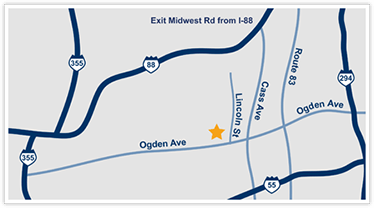
For those with unusual collectibles or items of uncertain origin, professional appraisal services provide clarity and peace of mind. Just as with rare coins or precious gems, meteorite valuation requires specialized knowledge and proper assessment tools. Collectible buyers in Westmont, IL and surrounding Chicago areas offer convenient options for obtaining expert evaluations. Contact experts who understand rare and valuable materials via website or call 630-296-9883.