

Why Is Quartz Used in Watches?
Ever wondered why quartz is used in watches? This tiny crystal sparked one of the biggest shake-ups in timekeeping history. Quartz technology revolutionized watchmaking by bringing reliable accuracy to everyday wear. Currently, about 80% of watches worldwide operate by using quartz, demonstrating just how practical this crystal is for keeping time in our busy world. If you’re in the market to buy or sell a luxury quartz watch, our team at Americash Jewelry & Coin Buyers can assist you.
The Unique Properties That Make Quartz Ideal for Timekeeping
The magic behind quartz watches comes from a phenomenon called the piezoelectric effect, discovered by French scientists Jacques and Pierre Curie in 1880. Quartz crystals produce electricity when they’re compressed, and they vibrate when electricity passes through them.
What makes quartz so good for watches is its remarkable stability. When cut into a tiny tuning fork shape and put into a watch, quartz vibrates exactly 32,768 times per second. This number wasn’t chosen randomly. It works perfectly for creating one-second ticks. The crystal maintains this beat regardless of the surroundings, giving quartz movement watches a reliability that traditional mechanical systems can’t match.
How Quartz Crystal Transforms Electricity Into Precise Time
How does quartz keep time? Your watch battery sends electricity through a circuit to the crystal, making it vibrate rapidly. Modern quartz watches use one pair of electrodes to both stimulate the crystal and detect its vibrations. A stable feedback loop is created to keep the system running smoothly until the battery is drained.
The watch’s circuit counts these rapid vibrations and converts them into an electric pulse exactly once per second. These pulses either light up numbers on a digital display or drive a tiny electric motor that moves the hands on a regular watch face. This motor receives the electrical signal and advances the hands in small steps, producing the familiar ticking sound and motion associated with quartz watches.
The Accuracy Advantage: Why Quartz Watches Keep Better Time
The difference in accuracy between quartz and mechanical watches is quite large. Most quartz watches only drift about 15 seconds in a whole month, while even a good mechanical watch might drift that much in just a few days. That makes quartz roughly 40 to 60 times more accurate than automatics.
Why such a big difference? Mechanical watches are affected by temperature, which changes the length of the hairspring and the weight of the balance wheel. Position also matters as gravity pulls differently on moving parts depending on how the watch sits on your wrist. Quartz avoids these problems since it relies on crystal vibrations instead of mechanical parts that can become defective. The most advanced quartz watches, such as the Citizen Chronomaster, are extremely accurate to within about five seconds per year thanks to innovative temperature-balancing technology.
The Quartz Revolution: From Laboratory Innovation to Wrist Standard
Using quartz for timekeeping began in the 1920s. In 1927, Warren Marrison built the first quartz clocks at Bell Labs. These early versions were huge and used mainly in laboratories. By 1960, technology was small enough to fit quartz in marine clocks, but wristwatches weren’t available until the late ’60s.
Everything changed on Christmas Day in 1969, when Seiko launched the Quartz-Astron 35SQ, the world’s first commercially available quartz wristwatch. This watch was remarkably accurate and began what became known as the Quartz Crisis of the 1970s and ’80s. During these years, traditional Swiss watchmakers were pushed out by cheaper, more accurate quartz watches from Asia. Thousands of jobs were lost in Switzerland. Fast forward to today, and quartz makes up about 80% of the global watch market.
Understanding Quartz Watch Limitations and Trade-Offs
Despite their many practical advantages, quartz watches face some image problems among collectors. As quartz watches flooded the market, many enthusiasts began considering them as mass-produced and lacking prestige, while mechanical watches became the preferred choice for purists. Most quartz watches can lose value over time, while well-kept mechanical watches can hold or even gain value. Some people also dislike the ticking motion of quartz second hands, preferring the smooth sweep of mechanical movements.
But not all quartz watches fit this mold. Early Seiko quartz models, such as the original Astron, are sought after by collectors who recognize their historical importance. Seiko continues to push the limits with its Grand Seiko 9F Series, which stays accurate to within 10 seconds per year, proving that high-end quartz can compete with luxury mechanical watches.
Making the Right Choice for Your Timepiece Needs
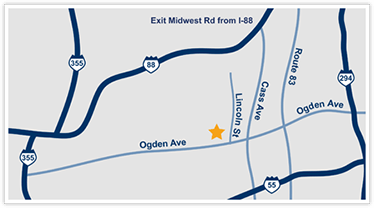
Choosing between a quartz and a mechanical watch really comes down to your lifestyle, budget, and personal preferences. Both quartz and mechanical watches have their place. Quartz is ideal if you’re constantly on the go, play sports, travel regularly, or just want a watch that stays accurate. Whether you’re shopping for a new watch or thinking of selling your current one, contact us at Americash Jewelry & Coin Buyers in Westmont.
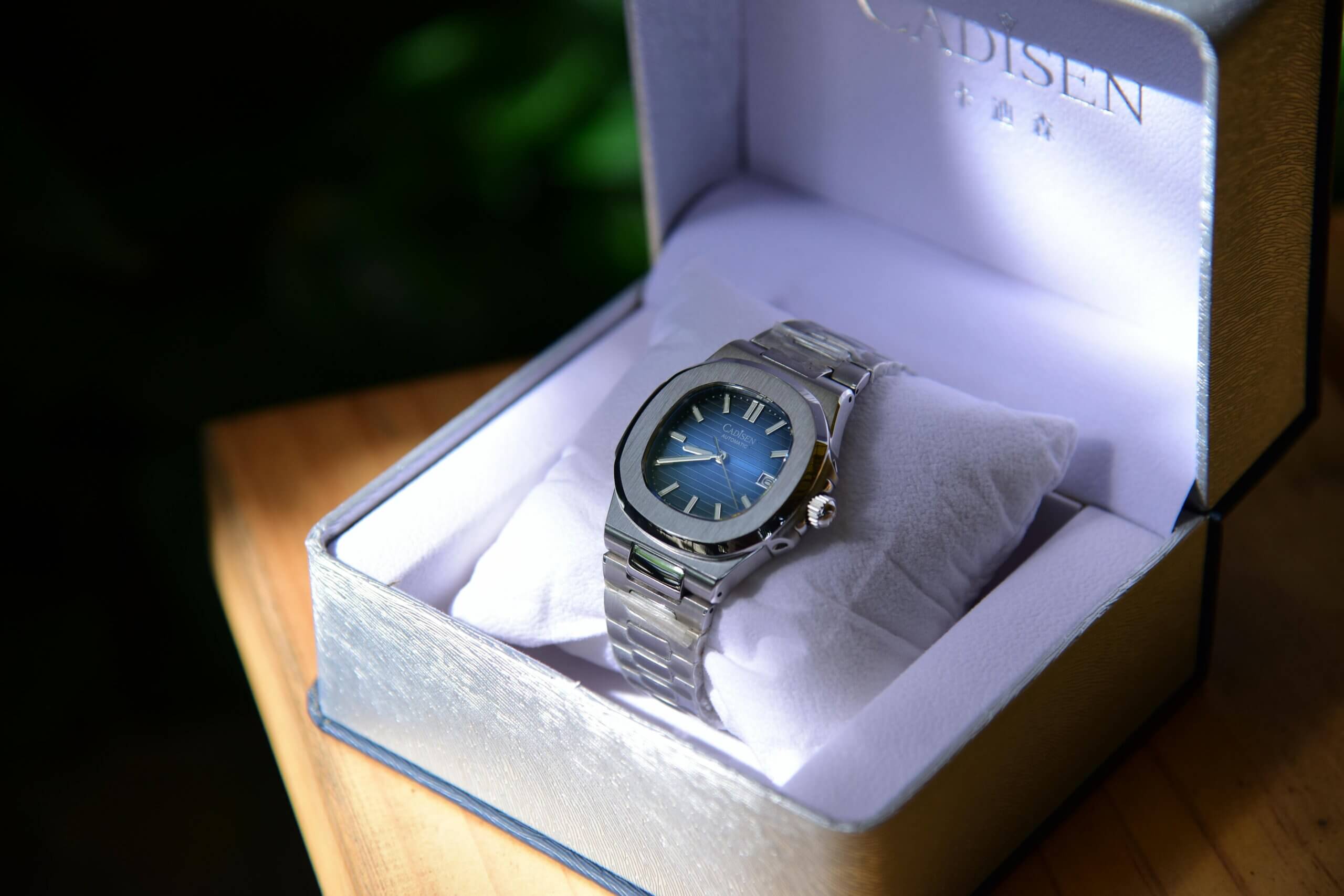
Elegant Luxury Watch in Display Box with Soft Lighting by Sóc Năng Động is licensed with Pexels License