


How America Gets Its Diamonds From a Crater in Arkansas
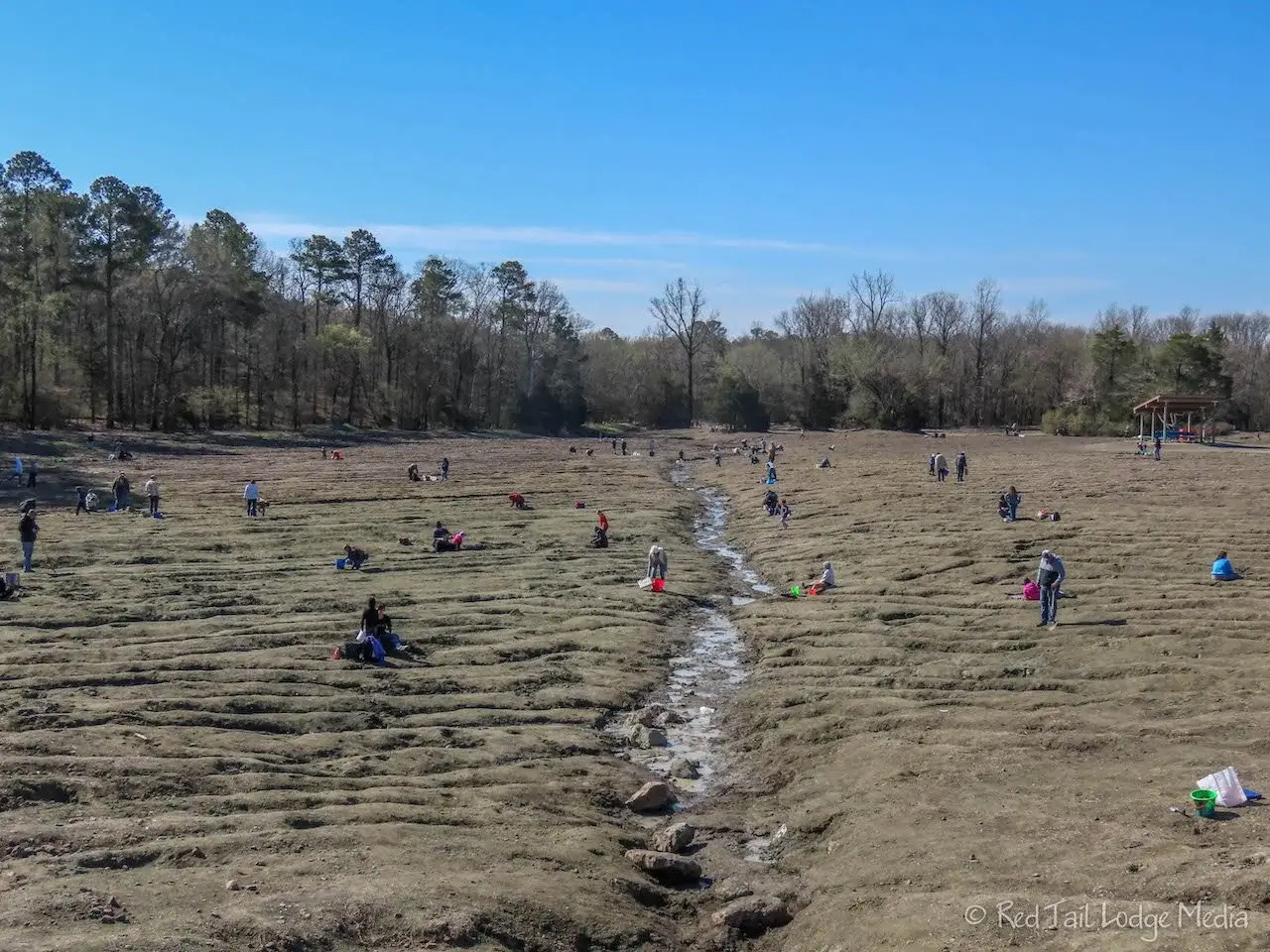
Hidden in Pike County, Arkansas, sits the Crater of Diamonds State Park. It’s something genuinely remarkable in American geology: the only diamond-producing site in our country where regular people can hunt, discover, and actually keep real diamonds. This 911-acre preserve along the Little Missouri River flips the usual narrative where American gem hunters have to rely entirely on international markets. The 37.5-acre plowed search field sits on top of the Prairie Creek Pipe volcanic vent and has yielded over 75,000 diamonds since someone first stumbled upon them in 1906.
What makes this park remarkable is simple: finders keepers, regardless of value. Diamond hunting here isn’t an exclusive corporate venture. Families, collectors, and gem enthusiasts come looking for authentic American-sourced stones. Since Arkansas made it a state park in 1972, visitors have pulled more than 35,000 diamonds from the ground.
The Volcanic Origins: How Diamonds Formed in Arkansas
The Ancient Eruption That Created a Diamond Field
Arkansas diamonds exist because of one violent geological event during the Early Cretaceous period, about 100 million years ago. Deep underneath what would eventually become southwestern Arkansas, diamonds crystallized under crushing pressure and heat within Earth’s mantle, roughly 90 to 120 miles below the surface. Diamond formation needs very specific conditions: carbon atoms squeezed under pressures exceeding 725,000 pounds per square inch and temperatures above 2,000 degrees Fahrenheit.
Everything changed when a volcanic eruption created what geologists call a diatreme. Picture a carrot-shaped volcanic vent that punched straight through Earth’s crust. This eruption blasted mantle material upward at incredible speeds, fast enough to preserve the diamonds instead of turning them back into graphite. The rapid journey brought diamond-bearing rock to the surface, creating the Prairie Creek Pipe that visitors search today. The volcanic material cooled and hardened, leaving behind a unique geological formation that sat quietly for millions of years.
Why This Geology Produces Gem-Quality Stones
The Crater of Diamonds gets its special character from lamproite, a magnesium-rich volcanic rock that hosts Arkansas diamonds. This geological detail matters quite a bit because most diamond deposits worldwide form in kimberlite, a completely different type of volcanic rock. The lamproite composition at the Arkansas site creates specific mineral associations and chemical environments that affect diamond quality.
This lamproite source produces stones across the entire quality spectrum, from industrial-grade specimens to gem-quality diamonds perfect for jewelry. The geological conditions during formation (the specific pressure, temperature, and chemical environment) shaped crystal structure, color, and clarity. When diamonds crystallized in the mantle before their volcanic journey, the unique chemistry of surrounding material influenced their final characteristics. That’s why Arkansas diamonds often show distinctive features that gem experts can recognize.
From 1906 Discovery to State Park: The Crater’s Journey
The Discovery That Changed Pike County
John Wesley Huddleston changed Pike County forever when he found two unusual crystals on his farm in 1906. Once people figured out these stones were genuine diamonds, interest exploded immediately. The town of Kimberly popped up around the discovery, and operations like the Arkansas Diamond Company and Ozark Diamond Mines Corporation tried sporadic mining attempts throughout the early twentieth century.
Why Commercial Mining Failed but Public Access Succeeded
Commercial mining proved tougher than expected. The diamonds scattered throughout the volcanic material made systematic extraction economically difficult compared to richer deposits in Africa and other established mining regions. These operational challenges accidentally preserved the site for eventual public use. By 1952, the property opened as a tourist attraction called “Crater of Diamonds,” letting visitors search for a fee while keeping whatever they found. This model worked where industrial mining had failed, making money through participation rather than extraction.
When Arkansas bought the site in 1972, it marked the complete transition to state park status, guaranteeing public access while ending private commercial mining attempts. This decision positioned the crater as an educational and recreational resource rather than purely an economic asset. The state’s management ensures that digging for diamonds in Arkansas stays accessible to anyone willing to spend time searching the plowed field.
Notable Diamonds Found and Their Impact on the Market
Record-Breaking Finds That Made Headlines
The crater built its reputation partly on exceptional discoveries that grabbed national attention and proved the site could produce significant stones:
| Diamond Name | Size (carats) | Year Found | Discoverer | Notes |
| Uncle Sam | 40.23 | 1924 | Wesley Oley Basham | Largest ever found in the US |
| Star of Murfreesboro | 34.25 | 1964 | N/A | Found during tourist era |
| Star of Arkansas | 15.36 | 1956 | Winifred Parker | Notable gem-quality stone |
| Gary Moore | 6.42 | 1960 | N/A | Tourist find |
The Uncle Sam diamond) still holds the record as America’s largest diamond discovery. The tourist-era discoveries, particularly the Star of Murfreesboro and Gary Moore diamonds, proved that public searching could yield valuable results, challenging assumptions that amateur hunters lacked the skills or luck to find meaningful stones.
The crater hasn’t slowed down. Regular discoveries show the volcanic pipe keeps producing diamonds more than a century after Huddleston’s find. Most measure under one carat, but their frequency maintains interest and proves the search field still contains accessible diamonds.
How the Crater Has Shaped America’s Diamond Landscape
Domestic Diamonds in a Global Market
Before 1906, American consumers had no local diamond provenance option, relying entirely on imports from South Africa, Brazil, and other international producers. The Arkansas discovery created a category that hadn’t existed: verifiably American diamonds with complete transparency about their origin.
The market impact goes beyond the stones themselves. The crater’s existence affects consumer understanding of diamond provenance and traceability. When buyers want diamonds with documented origins, Arkansas stones offer complete transparency from ground to hand. This traceability becomes increasingly important to consumers concerned about supply chain ethics and environmental impact, positioning rough diamonds from Arkansas as alternatives to sources lacking clear documentation.
The Growing Appeal of American-Sourced Gems
Raw diamonds Arkansas produces carry built-in stories that enhance their appeal beyond physical characteristics. Each stone represents a personal search experience, creating emotional value that mass-produced diamonds can’t match. For collectors, rough raw Arkansas diamonds offer specimens with documented American origins, a category that barely existed in gemstone markets before the twentieth century. The combination of domestic provenance, public discovery, and geological uniqueness creates market positioning that international sources simply can’t replicate.
The crater’s influence on American diamond consciousness extends to education about formation of diamonds and geological processes. Visitors learn that diamond creation requires specific conditions. Not mystical rarity, but precise pressure, temperature, and chemistry. This educational aspect demystifies diamonds while reinforcing their genuine value.
What It Takes to Find a Diamond at the Crater
Understanding the Search Environment
Finding diamonds at Crater of Diamonds requires understanding the search environment and recognizing what to look for. The plowed field gets regular maintenance that brings deeper material to the surface, exposing diamonds that were buried before. Recent rain often improves conditions by washing away obscuring dirt and making crystal surfaces more visible against the soil.
Recognizing Diamonds in Their Natural State
Successful searchers learn to spot diamond characteristics in their natural state. Rough diamonds from the crater don’t look anything like polished jewelry stones. They appear as crystals with smooth, rounded surfaces that reflect light in a particular way. Common colors include white, yellow, and brown, though Arkansas has produced rare pink and blue specimens. The stones often have a greasy or waxy luster rather than brilliant sparkle.
Search Techniques and Realistic Expectations
Surface searching after rain works best for many visitors, since water action concentrates heavier materials and reveals crystals. Some hunters prefer screen-washing soil, a technique where dirt passes through mesh screens while heavier items like diamonds stay behind. Patience matters more than technique. How often are diamonds found at Crater of Diamonds depends partly on search time and partly on luck. The park reports that visitors find an average of one or two diamonds daily, though size and quality vary dramatically.
Understanding the Value of Arkansas Diamonds
Arkansas diamond valuation follows the same criteria applied to all diamonds: carat weight, color, clarity, and cut potential. However, diamonds found at the crater carry additional value factors that influence their worth. Provenance as America’s only public diamond mine adds collector appeal, particularly for specimens with notable characteristics or interesting discovery stories. Rough diamonds Arkansas produces serve both jewelry purposes and collector markets, with different buyers prioritizing different attributes.
Gem-quality stones suitable for cutting command prices based on their finished potential. Cutters evaluate rough diamonds to determine optimal shapes and sizes that maximize value while minimizing waste. Industrial-grade diamonds, while not suitable for jewelry, have value in abrasive and cutting applications. Even small or included specimens interest collectors as examples of American mineralogy.
Ready to Learn What Your Diamonds Are Worth?
Whether you’ve found a rough diamond at the Crater or own stones you’re curious about, Americash Jewelry & Coin Buyers can help. Located at 16 W Ogden Ave, Westmont, IL 60559, and led by Brian the Cashman (as heard on WGN 720), our team brings over 100 years of combined experience evaluating diamonds, jewelry, gold, coins, and collectibles. For over 20 years, we’ve offered immediate cash with expert appraisals in a no-pressure, transparent environment. We also serve customers through their online platform and Las Vegas location.
Contact Americash for a free appraisal and discover what your diamonds are really worth.